


Blocked drains, informal settlement growth and heavy rain leave residents trapped in a cycle of damage and response
Peter Luhanga
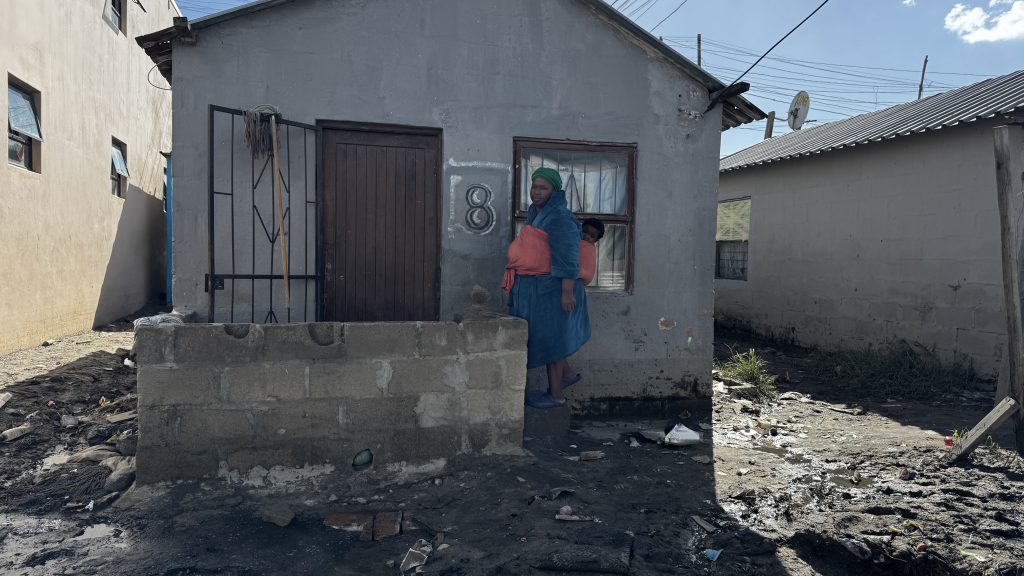
A brick-and-cement wall now blocks the front door of an RDP house on Silverleaf Road in Dunoon, built to keep floodwater out after years of winter damage.
But it has created a new daily struggle. Thobeka Madalane, 38, has to climb onto two makeshift steps and lift herself over the wall just to get inside the one-room home she shares with five relatives, including her 10-month-old baby. There is no proper step, only the barrier standing between her and the door. Inside, the damage from recent flooding is still visible. The walls are damp, the floor marked by water, and a double bed has been raised on cement bricks to keep it dry.
A cycle of flooding after heavy rain
Heavy rain over the weekend of 18 and 19 April flooded parts of Dunoon. Another downpour on Sunday 26 April brought water back again.
Residents say water floods the roads and then floods yards and narrow spaces, and enters homes before it can drain away. This happens every winter.
Madalane says she has changed how she lives. She keeps as little furniture as possible and raises what she can. Some things, she says, are simply not worth replacing.
Across the area, others have done the same. Entrances have been raised and beds have been lifted. But when rain is heavy, the water pushes past the barriers and floods the houses anyway.
Limits of the city’s stormwater response
Residents say the City of Cape Town sends teams to pump water and clear blockages after heavy rain. It helps for a while. Then the next downpour comes, and the flooding returns.
Mayco member for urban mobility Rob Quintas says flooding in parts of Dunoon followed sustained and intense rainfall over the weekend of 18 and 19 April, with teams from the Roads Infrastructure Management Department deployed to affected areas.
He says operational teams carried out pumping in affected areas, providing localised and temporary relief.
He says the City is engaging with residents to secure access to bulk stormwater infrastructure so that maintenance and clearing operations can proceed safely.
He says flood risk in areas such as Silverleaf Road will persist unless access to critical infrastructure is restored and overland flow routes are cleared.
He says the issue is not a routine maintenance challenge but a complex one that requires coordination across departments and engagement with residents whose structures may be blocking access to stormwater systems.
He says any long-term solution would need to follow legal and humanitarian processes, including consideration of alternative accommodation where necessary to move people living in shacks blocking access to stormwater drains that need to be cleared.
He says flooding is caused by a combination of factors, including the intensity and duration of rainfall, the low-lying nature of the area and limited access to key infrastructure.
He says in some parts of Dunoon, including along Silverleaf Road, structures have been built over bulk stormwater systems such as manholes and catchpits, preventing essential maintenance.
He says the natural overland flow routes designed to carry excess water during heavy rainfall have also been obstructed.
He says when both the underground drainage system and surface flow paths are blocked, water has nowhere to go, increasing the risk of flooding during sustained or intense rainfall.
Living with damp, damage and loss
“I stopped buying furniture. It does not feel like home. It is not comfortable. The streets are murky. There is no space for kids to play, and in winter our children fall sick all the time. This place smells,” says Madalane.
Her sister, Nosipho Ginyana, 38, a mother of three, says drains across Section 23 in Dunoon are blocked, leaving Silverleaf Road badly flooded.
She says the concrete barrier built at their door to stop the water did not work, with floodwater rising above it and submerging it.
Settlement expansion and pressure on drainage
Ekupholeni informal settlement, behind the RDP houses near Siyahlala, now occupies land that was previously a municipal sports field before it was taken over in 2018.
On the ground, shacks have been built around and over stormwater and sewage infrastructure, including manholes. On Sunday 26 April, city teams were seen pumping into the system to unblock stormwater drains, with large hoses laid through the settlement. In some instances, structures appear to have been erected over or immediately adjacent to this network.
Housing constraints and relocation challenges
Mayco member for Human Settlements, Carl Pophaim, says City teams have assessed the damage in Dunoon and are providing assistance where possible.
He says both formal and informal areas have been affected, with around 206 flood relief kits distributed to residents whose structures were damaged.
He says the worst flooding was in Ekupholeni, with the situation exacerbated by illegal dumping into stormwater networks, which causes blockages and prevents water from draining properly.
He says the City’s Informal Settlements Management teams are responsible for assessments and assistance, while the Disaster Risk Management Centre activated humanitarian relief, including coordination with SASSA and the Department of Social Development.
He says the National Department of Human Settlements is responsible for emergency housing programmes and the City is engaging with national government for further support.
He says relocation of some residents is the only long-term solution, but it is not immediately possible due to a lack of suitable land. The City identifying land for relocation, but he said this takes time and careful planning.
He says flooding risks in Dunoon will remain in the short to medium term, and that structural interventions are needed to reduce the impact.
Neighbouring homes face repeated damage
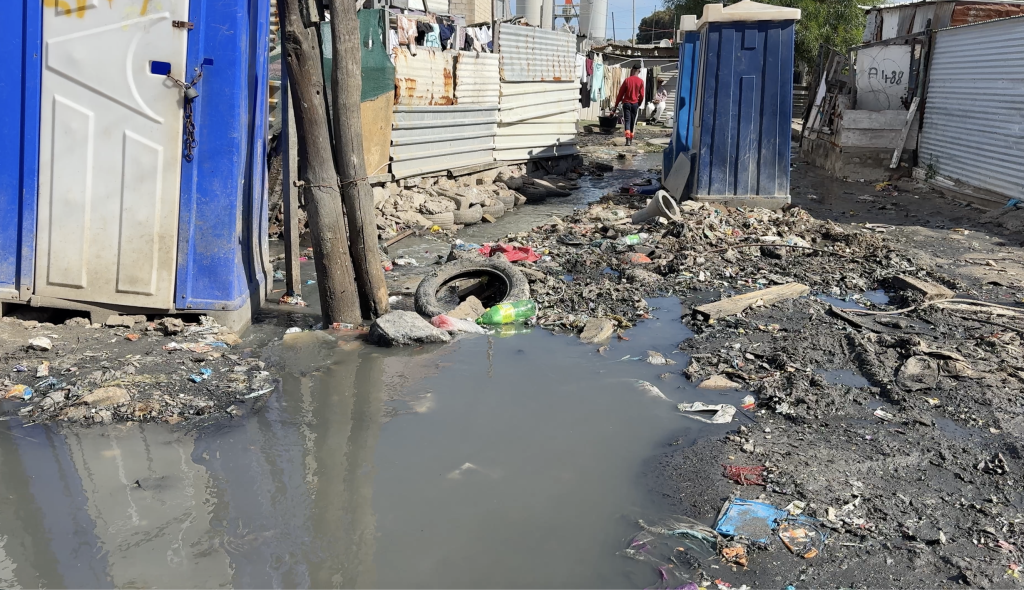
“When City of Cape Town officials come, they unblock the drains, take pictures and leave. At the back, people have built shacks over sewage and stormwater manholes,” says Madalane.
Mkhuleni Bhaceni, 53, who lives next door to Madalane, has built a similar barrier at his entrance, though he says it offers little protection against flooding.
Bhaceni said the problem has persisted since 2016 and has worsened over time. Inside his home, most of the furniture has been damaged. His bed has been raised on concrete blocks, and the lounge stands largely empty.
A persistent damp smell fills the space. The floor in the bedroom remains saturated, with water rising underfoot when stepped on.
“The walls around the doors do not work. We need to make them higher,” says Bhaceni.
He says instead of repeatedly unblocking drains after flooding, the City should consider building a higher barrier along Silverleaf Road to prevent water from entering homes.
Removing the shacks covering infrastructure access would take time, he said, but a wall could be built more quickly.
Access to infrastructure under strain
In Ekupholeni, City machinery squeezed though narrow passages to access blocked sewer and stormwater manholes.
Simangele Ngcoba, 24, lives in a shack where two stormwater manholes sit inside his yard.
Ngcoba says he is not responsible for the problem, pointing out that both manholes are open and accessible.
“I have two stormwater manholes in my yard and they are accessible. We are not blocking the drains. The city has access to them,” says Ngcoba.
He says residents cannot be blamed for building along stormwater routes, as the City has not provided suitable land for housing.
Waste and blockages in the system
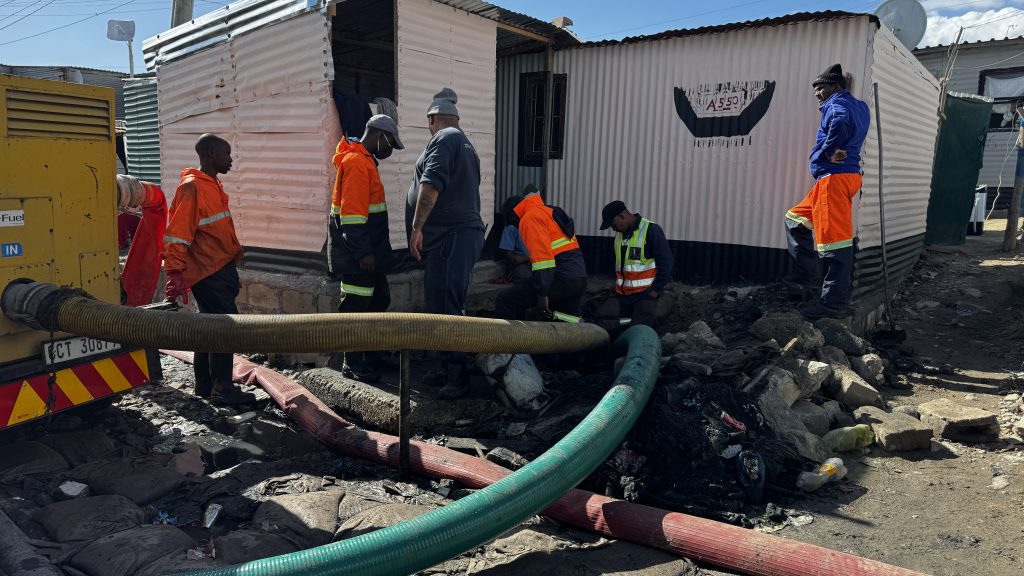
Next to Ngcoba’s shack, City teams had opened a stormwater manhole in Noluthando Mgojo’s yard. She says when she built her shack in 2018 the drain was working, even though it would sometimes overflow. She says the situation got worse when people started opening manholes and dumping waste, including faeces and household rubbish, into the system.
When it blocks, she says, the overflow runs through the narrow passages and past nearby shacks.
“It’s always smelling here. We don’t have options,” she said.
A municipal worker, who could not be named under City of Cape Town media rules, said they were clearing out faecal matter, rags, rocks and other household waste from the drain. He said the stormwater system is clear further up near Silverleaf Primary School, but becomes contaminated as it flows through Siyahlala and Ekupholeni.
Sanitation response and public warning
Mayco member for Water and Sanitation, Zahid Badroodien, said rags were removed from screens at the Dunoon Pump Station on Sunday 19 April, and that no overflows were recorded at the facility.
He says residents should report sewer blockages and other sanitation problems, and keep their reference numbers to follow up on service requests.
He says people should not flush anything other than human waste and toilet paper, warning that other materials can block the system and lead to blockages and overflows.