


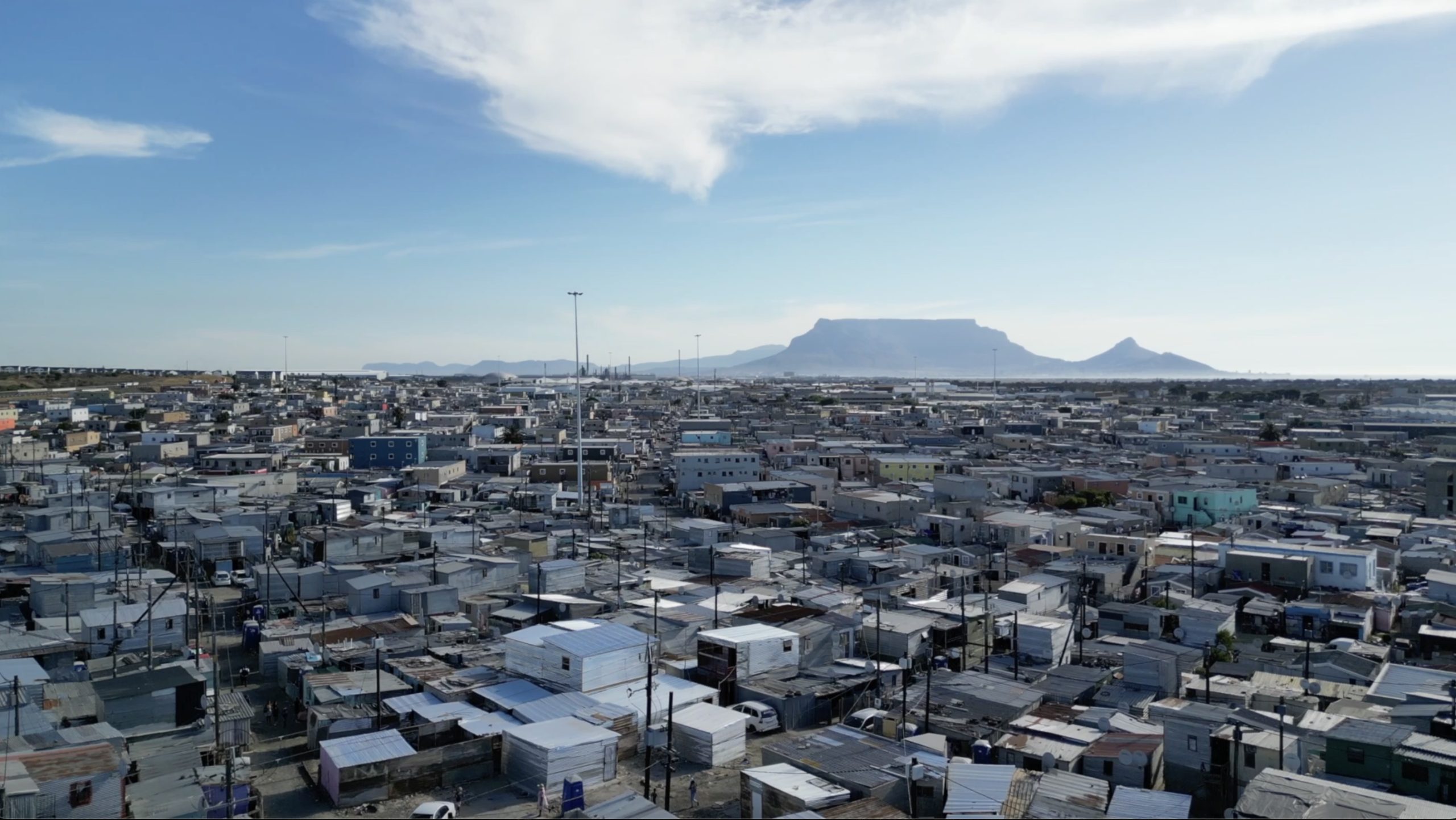
Thousands remain trapped in overcrowded settlements while a neighbouring property is offered to private developers, with no guarantee of affordable housing
Peter Luhanga
- The City has put out a tender for private developers to build about 2,500 homes on a 72-hectare property next to Dunoon.
- The tender does not stipulate how many affordable homes must be built, and there will be no fully subsidised BNG homes.
- The land was initially bought by the City in 2017 with promises it would be used to relief overcrowding in the township.
- More than 1,700 of Dunoon’s nearly 2,700 housing applicants have been waiting for 20 years or longer.
- Other projects to relief overcrowding have not taken place or have stalled.
A massive new housing project across the highway from severely overcrowded Dunoon township has been offered to private developers but will contain no fully subsidised homes, and the number of affordable units is not stipulated.
This is despite the development on the 71.8-hectare municipal property known as Annandale Farm having been presented to Dunoon residents as a solution to overcrowding in a township where no government housing has been built in the last 26 years.
The Annandale Farm was bought by the City in 2017 and then-mayor Patricia de Lille announced at the Dunoon community hall that it would be used to provide subsidised homes for the community.
But the City has confirmed the planned Annandale development will not contain any fully subsidised Breaking New Ground (BNG) homes, nor will affordable housing be reserved for residents of Dunoon or adjoining informal settlements.
The City plans to sell the land to a private developer for a mixed-use project aimed at households earning between R3,500 and R34,800 a month.
Unemployed residents and households earning less than R3,500 a month will not qualify.
The City’s housing records show 2,679 applicants have recorded Dunoon as their residence on Cape Town’s Housing Needs Register. Of these, 1,708 have been waiting for at least 20 years.
Between 1996 and 2000, nearly 3,000 RDP houses were built in Dunoon. No state housing has been built in the township since.
Bursting at the seams
Dunoon has since expanded beyond its original borders, with families erecting shacks on sports fields, beside industrial areas, beneath the Potsdam Road bridge, near the Diep River floodplain, and on railway reserves.
There are now more than 30 informal settlements in the Dunoon area, with some having no water or toilets.
Two years ago then SA National Civics Association chair Sinethemba Matomela reported Endlovini contained about 1,800 shacks with 20 communal toilets but no potable water. Newlands informal settlement had about 1,000 shacks without communal toilets or potable water. Eluxolweni had an estimated 1,300 shacks and 25 communal toilets but no potable water. Riverside, beside the Diep River, had about 1,500 shacks without toilets or water.
No more BNG subsidy
The City invited bids for the sale and development of Annandale Farm in July this year. The tender envisages a new neighbourhood combining about 2,500 affordable and market-related housing units with businesses, schools, community facilities, transport infrastructure and public open spaces.
But the tender does not prescribe a fixed number or percentage of affordable homes.
City human settlements mayco member Carl Pohaim confirmed there will be no fully subsidised housing in Annandale, and the final number of affordable homes will depend on proposals received.
Pophaim said the development will serve people who can rent or buy. Qualifying Dunoon residents may apply, but applicants from elsewhere in Cape Town will also be eligible. No units will be reserved for Dunoon residents.
He said the national BNG subsidy was now focused on qualifying applicants older than 60, military veterans, and child-headed households, and the national minimum wage of R5,900 per month showed BNG housing had “a limited application for most”.
He said national funding shortages and regulatory and administrative constraints had led the City to establish its own affordable housing programme. Under that programme, municipal land is sold at a discount to private developers, who are expected to cross-subsidise the affordable rental component.
He said the City has also relaxed planning requirements for small-scale developers in areas such as Dunoon. Entrepreneurs may construct up to 12 micro-development units without applying for rezoning or submitting Land Use Management applications. The City also makes building plans available free of charge.
“Because the national subsidy programme no longer looks after the majority of residents (or anyone with a job and under 60), the City is enabling the private sector (developers of all shapes and sizes) to build homes for cheaper and faster,” he said.
But the City has not determined what rentals at Annandale will cost or how many households in Dunoon’s informal settlements could afford them.
GOOD party secretary-general Brett Herron said Annandale Farm was purchased for R185-million with money redirected from the planned expansion of the Wolwerivier Temporary Relocation Area.
Herron said the money had been redirected specifically to relieve overcrowding in Dunoon. According to him, the tender documents valued Annandale at R256-million in September 2025.
“A prime chunk of Milnerton real estate acquired nine years ago by the City of Cape Town specifically to alleviate overcrowding in Dunoon is now being sold to a private developer for a fat profit without the City having built a single home,” Herron said.
He said affordable housing accounted for only ten of the 100 points available in the tender evaluation. He said this meant a bidder could receive no points for affordable housing and remain eligible to win the tender.
GOOD has submitted an application under the Promotion of Access to Information Act seeking records showing whether the property was bought with Urban Settlements Development Grant funding and what conditions were attached to grant.
Informal settlements not upgraded
At Doornbach, also known as Site 5, approximately 3,500 families live in a settlement the City first said it would upgrade in 2016.
Pophaim confirmed nothing has been delivered.
“Doornbach is still in the pipeline for upgrading,” he said, adding the settlement must first be de-densified so that roads, underground services and other infrastructure can be installed.
After more than 600 structures were destroyed and approximately 2,600 people displaced by a fire in January, the City proposed allocating R12-million to reblock the settlement. Reblocking would have reorganised the settlement to create access routes and space for services.
The project did not proceed.
“No, the re-blocking was not completed and no money was spent,” said Pophaim.
The City could not provide an approved plan, budget, household figures, implementation timetable for upgrading Site 5. It said a plan would first have to be finalised and agreed upon with the community.
It also said some residents would have to be relocated before upgrading could begin, but did not say where they would be moved.
Killarney Gardens on hold
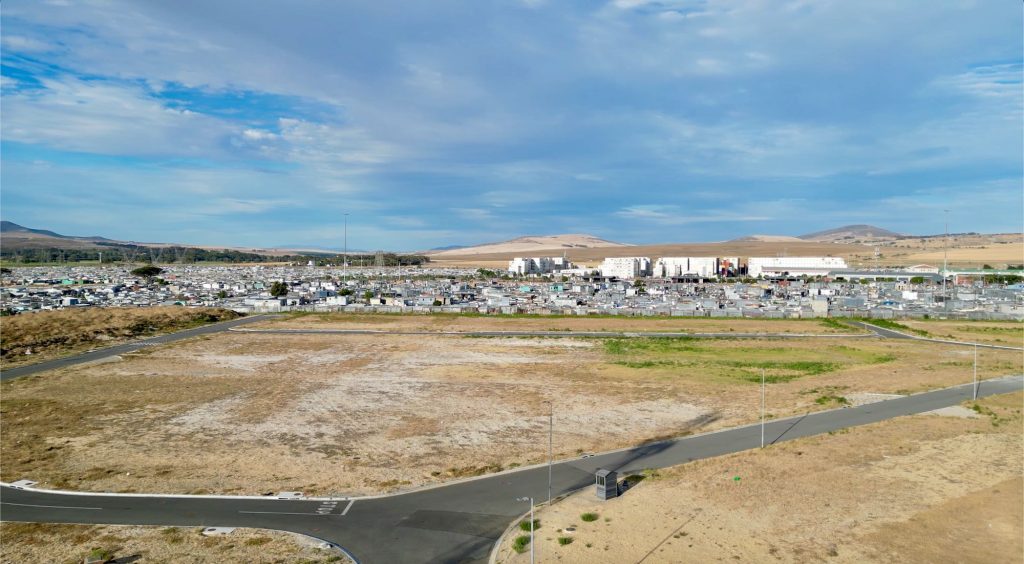
Meanwhile, another housing project at Killarney Gardens intended to ease overcrowding in Dunoon remains incomplete.
In April 2020, then human settlements minister Lindiwe Sisulu announced that 1,500 families would be moved from Dunoon’s overcrowded informal settlements by July that year. The relocation was presented as an emergency measure to reduce the spread of covid.
The deadline passed without the families being moved. The project was subsequently delayed by rezoning appeals and funding problems.
Western Cape Government infrastructure department spokesperson Stephen Heyns said the project had always been planned as a high-density, multi-storey transitional residential area containing 1,500 units.
The province installed the bulk, link and internal services required for all 1,500 units. Construction of the structures was supposed to be funded through the national Emergency Housing Grant.
Heyns said the national Department of Human Settlements later changed the grant conditions which disallowed the provincial government to access funding to build homes.
The province considered converting the development into 488 permanent BNG homes but Heyns said the option was rejected because the installed services had already been designed for the original 1,500-unit development.
No construction or infrastructure work has taken place since an oversight visit by the National Council of Provinces in September 2025.
The province and the City have now agreed that the land and responsibility for completing the project will be transferred to the municipality. Transfer documents give the City power of attorney to begin planning and implementation while the change of ownership is under way.
Because it is a municipality, Heyns said the City remains eligible to access the Emergency Housing funding and intends to implement the original 1,500-unit development while investigating other funding sources.
No construction date, completion deadline or confirmed budget has been announced.
The City referred detailed questions about Killarney Gardens to the provincial government, despite having agreed to assume responsibility for the project.