


Arrests following violent protest over electricity disconnections
Peter Luhanga
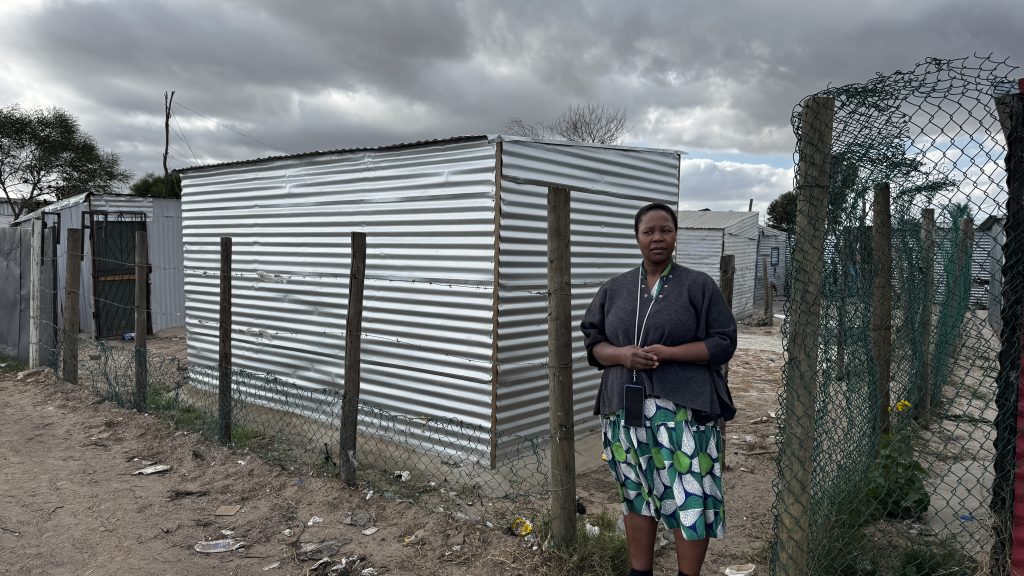
- Eskom’s removal of illegal connections in Covid informal settlement let to protests earlier this month.
- Nine people were arrested after looters stripped a truck carrying TVs and set it on fire
- Families say they are left in the dark, using buckets for toilets and risking electrocution from illegal connections.
- City says it cannot intervene regarding electricity supply, as the informal settlement is in an Eskom supply area.
A delivery truck carrying smart televisions was looted and set alight in Atlantis after residents in a nearby informal settlement reacted to illegal power lines being removed by Eskom on 13 April.
Tyres were first set alight in protest on John Dreyer Road, blocking a busy route linking Atlantis factories to the R304, after which the unrest escalated, resulting in the truck being looted and torched.
The Covid informal settlement targeted by Eskom was established during the covid hard lockdown of 2020 when people who lost their income and were unable to pay rent moved onto the privately owned land.
The City of Cape Town bought the land five years later, in 2025.
Confirming the protest, provincial police spokesperson Constable Ndakhe Gwala said nine suspects between the ages of 18 and 25 were arrested in Covid informal settlement on charges of theft and possession of stolen property.
“Members of Public Order Police were deployed to monitor the situation. As they were approaching the crime scene on foot, they spotted the suspects carrying flat screen television boxes. They then came under attack as the group started throwing stones. The members managed to ward off the attack and apprehended nine male suspects,” said Gwala.
He said 17 television sets were recovered from the suspects, who appeared in the Atlantis Magistrate’s court.
Residents say they had been paying for their electricity connections to nearby RDP houses in Witsand township.
Nelisiwe Sibisi, 40, who lives in a three-room shack with her husband and two children aged seven and 17, said she had previously rented an RDP house before the owner returned from the Eastern Cape to reclaim it. With nowhere else to go, Sibisi said she paid R15,000 for a plot in the informal settlement,
“We’re a family. We saw people occupying land as if it is legal. We were looking for something. If it is possible to get land, why not, especially when we have kids.”
She said daily living was shaped by the absence of basic services. While some portable flush toilets had been provided, there were no communal toilets, forcing residents to use buckets or relieve themselves in bushes across John Dreyer Road. Crossing the road, she said, carried risks, particularly for children sent to collect portable toilets after they had been cleaned by a city contractor.
“There is a bad smell from the toilets, so they are placed across the road,” she said, adding that children had been struck by vehicles along the busy route serving Atlantis’s industrial area.
She also said illegal electricity connections posed deadly risks.
“Our children, when playing, get electrocuted. One child was electrocuted to death,” she said.
But without electricity, she said children struggled to study. Some relied on cellphone torches, and when batteries ran flat, studying stopped altogether.
The darkness also gave criminals cover.
Residents typically paid a once-off fee of R500 to connect to electricity from an RDP house, followed by R300 a month, she said.
The cost of disconnection was immediate for some businesses. Spaza shop owner Zukile Tsutsu said the power cut meant she lost about R5,000 worth of stock that needed refrigeration.
“Eskom removed electricity wires flying over Covid informal settlement. We went to buy new wires and reconnected,” said Tsutsu.
She said it cost her R3,200 to replace the wiring and pay for reconnection.
Sanitation woes
With sanitation still unresolved, community leader Morris Gamanye said he had approached the City of Cape Town for guidance on installing a septic tank and toilet facilities, but had yet to receive a response.
Regarding toilets, mayco member for Water and Sanitation, councillor Zahid Badroodien, said 455 portable toilets were rolled out in the settlement on 3 March 2022.
Badroodien said the portable toilets are serviced by a contractor four times a week: on Mondays, Wednesdays, Fridays and Saturdays, with checks carried out through records and site visits when problems are reported.
He said officials have proposed container toilets as an alternative, but were waiting on the community to identify suitable sites before installation can go ahead.
City Environmental Health stated basic services are provided to the informal settlement. The department stated households were given portable toilets with closed lids by the Water and Sanitation Department after talks with the community, and insist the units pose no health risk if used properly. The area is checked every two weeks, with any health hazards flagged to the relevant departments for action
Regarding providing full scale municipal services, Human Settlements mayco member Carl Pophaim said the City’s Informal Settlements Management team was determining whether a Temporary Relocation Area can be created within Witsand. This would allow access roads to be opened, enabling the installation of basic services.
Energy mayco member Xanthea Limberg said Eskom supplies electricity to the Witsand area and had exclusive authority to supply electricity and operate networks within the area.
As a result, said Limberg, the City was prohibited by law from supplying electricity to Covid informal settlement, or responding to electricity faults in the Eskom area. She said the City did not have the authority to change the boundaries in which Eskom operated, but was engaged with Eskom on electricity-related matters. The engagement included the potential transfer of supply areas where feasible and in the public interest.
However, she said Eskom cancelled formal talks in May 2024, and discussions would need to resume for any changes to proceed.
She said the City continues to work with Eskom to improve service delivery, but is legally restricted to operating within Eskom-licensed areas, except for public lighting, which remains a municipal responsibility across the metro, including Eskom-supplied areas.